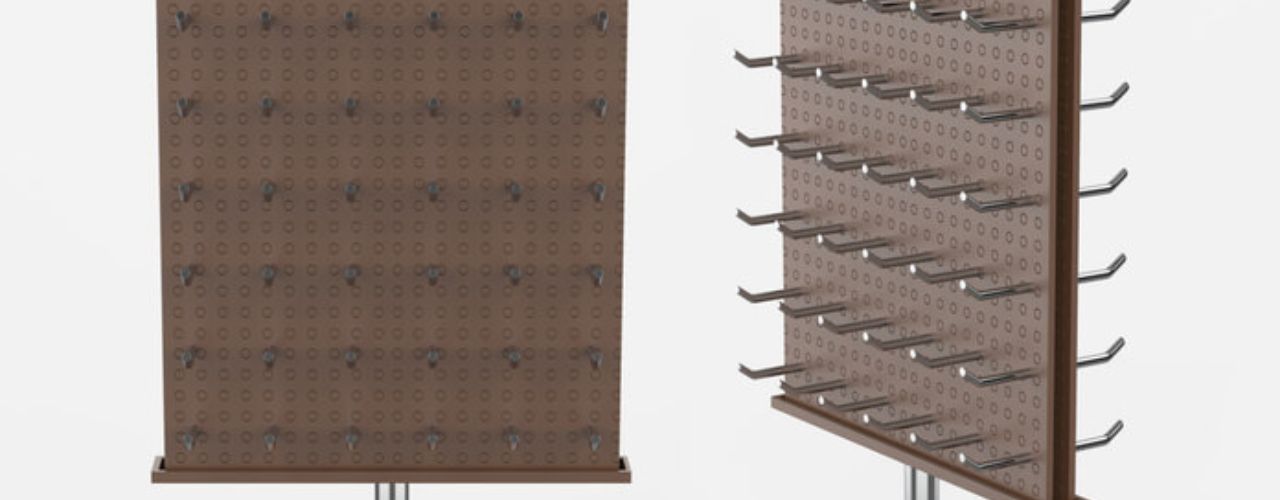
Slatwall hooks are the core hardware used by UK retailers to suspend and organise merchandise on vertical display panels. When poorly specified, they bend under cumulative strip load and cause bays to sit forward during daily trading. In stores that replenish frequently and adjust layouts regularly, the right slatwall hooks determine how securely products sit and how long panels retain their tolerance. Correct specification at the outset reduces fixture fatigue and unnecessary corrective adjustments later in the trading cycle. In refurbishment projects and new store rollouts this attention to detail supports consistent installation standards across locations while improving merchandising consistency and long-term operational efficiency.
What Are These Hooks Used For in Retail Stores?
Slatwall-mounted display hooks slot into horizontal panel grooves and support hanging merchandise. Retailers use them to move stock onto vertical space, increase product visibility and maintain clear SKU separation. Electrical, DIY and convenience stores rely on this format because it allows fast resets without structural changes.
How Do You Choose the Right Slatwall Hooks for Your Products?
Start with total strip load, not individual unit weight. Packaging depth and number of facings influence long-term performance. Incorrect specification often does not fail immediately and instead shows through gradual forward deflection after repeated handling.
What Length of Slatwall Hook Do You Need?
Match hook length to packaging depth and intended facing capacity. Excess length encourages rear stacking and uneven weight distribution. Shorter configurations give tighter control during replenishment and help keep load distribution predictable.
When Should You Use Single or Double Prong Slatwall Fittings?
Single prong fittings suit narrow, lightweight items. Double prong designs spread load across the groove and reduce torsional movement on wider packaging. In higher-volume categories, this added stability maintains alignment.
Do You Need Heavy Duty Slatwall Support Hooks?
Heavy duty slatwall support hooks use thicker gauge metal to resist forward deflection under sustained load. They suit categories where cumulative strip weight builds quickly and reduces groove fatigue over time.
What Weight Can Slatwall Hooks Safely Hold?
Load capacity depends on hook construction and panel strength. Retail-grade slatwall hooks must support combined strip weight without bending or loosening. When hardware angles forward after replenishment cycles, cumulative load has exceeded intended tolerance. Sustained overloading accelerates groove wear and shortens panel lifespan.
Retail teams should assess total strip weight and confirm manufacturer ratings before installation.
If you are reviewing strip load, panel type or hook gauge ahead of a refit or range expansion, a short specification check can prevent corrective work later. Outline your current setup through our contact page and we will review the configuration before larger orders are placed.
Will Slatwall Hooks Fit Every Slatwall Panel?
Panel systems vary in construction and load performance. Standard groove spacing is common across UK formats, yet materials differ between MDF panels and aluminium insert designs. Slatwall display hooks must seat firmly within the groove without forced installation. Loose fittings increase movement under load. Excessively tight fittings damage panel edges.
Confirm panel type, insert specification and groove dimensions before ordering in volume. Our team can evaluate compatibility and recommend suitable configurations prior to rollout.
Common Mistakes When Selecting Slatwall Hardware
Common mistakes include selecting excessive hook length, underestimating cumulative strip weight and mixing different gauges within a single bay. In multi-store estates, inconsistent hardware disrupts standardisation and affects alignment over time.
Plan specification across departments to maintain consistency during resets and reorders.
How Can These Hooks Improve Display Organisation?
Well-specified slatwall display hooks maintain consistent facing depth and predictable spacing. Stable placement limits tilt after handling. Modular positioning allows teams to reposition hardware during promotions or range updates without reworking entire panels.
What Should Retailers Check Before Ordering Slatwall Hooks?
Before purchasing slatwall hooks, confirm:
Panel material and insert type
Intended strip load
Required facing capacity
Hook length and gauge consistency
Estate-wide standardisation requirements
Clear specification at ordering stage reduces corrective work later.
Reliable Slatwall Hooks Support Long-Term Retail Performance
Reliable fixtures underpin organised retail displays. When hardware remains straight under sustained trading, panels require fewer adjustments. Appropriately specified hardware protects panel systems and supports consistent replenishment standards.
If you are planning a refit or reviewing fixture consistency across sites, we can assess panel compatibility, load considerations and hardware standardisation before orders are finalised. Visit our contact page to discuss your requirements and ensure your slatwall configuration is specified correctly from the outset. A brief conversation at specification stage can avoid uneven bays and mixed hardware once trading resumes.
Frequently Asked Questions
Are metal slatwall display hooks stronger than plastic alternatives?
Metal display hooks are generally more durable in commercial retail environments, particularly where replenishment is frequent and cumulative strip weight is higher. Thicker gauge steel options resist forward deflection more effectively than lightweight plastic fittings.
What is the difference between slatwall hooks with backing plates and standard hook fittings?
Hooks fitted with backing plates distribute load across a wider section of the panel groove, which can improve stability where weight is concentrated. Standard hook fittings remain suitable for lighter merchandise and evenly distributed loads.
Can slatwall hooks be used for power tool accessories and heavier DIY products?
They can be used for these categories, provided the panel system includes suitable reinforcement and the hardware gauge matches the intended strip load. In DIY and electrical environments, calculate cumulative weight across each bay rather than relying on individual product weight alone.
How do you standardise slatwall hardware across multiple retail stores?
Standardisation begins with confirming panel type, insert specification and preferred hook gauge across all locations. Using consistent lengths and load ratings simplifies reordering and reduces inconsistency during replenishment cycles.
Are slatwall systems suitable for seasonal product resets?
Yes. Slatwall panel systems allow hardware to be repositioned without structural alteration, making them suitable for seasonal category changes and promotional displays.
Do aluminium insert slatwall panels improve load performance?
Panels fitted with aluminium inserts strengthen the groove and reduce wear under sustained weight. In higher-load environments, insert systems help maintain tolerance compared with unsupported MDF configurations.