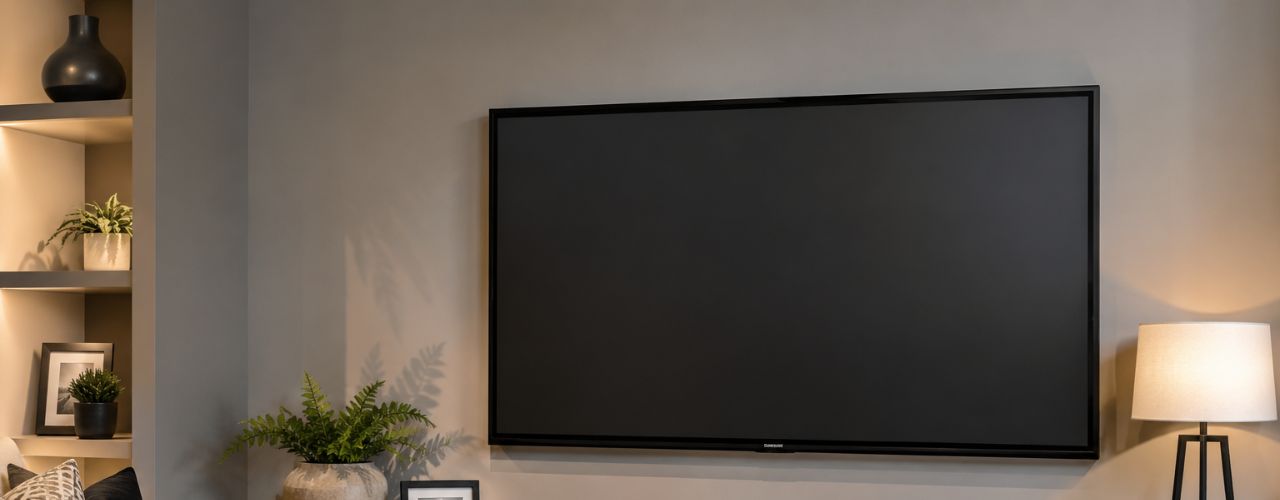
A room that feels complete is often easier for customers to connect with. When visitors enter a display area and see familiar features arranged in a realistic way, they can focus on imagining themselves in the space rather than noticing what may be missing.
A television is one of the most recognisable features in a modern living room. In many homes, it acts as a focal point around which furniture is arranged. When a display includes sofas, coffee tables, lighting, and decorative accessories but lacks a television, the space can feel unfinished.
Fake TVs help solve this problem by completing the visual story. They provide the appearance of a genuine television without requiring power, wiring, software updates, or expensive hardware. The result is a more convincing environment that supports customer visualisation and creates a stronger impression.
Why customers need context before they buy
Customers rarely make purchasing decisions based solely on individual products. Instead, they often evaluate how products will fit into their lives.
Think about a furniture showroom. A customer may be interested in a particular sofa, but their decision is unlikely to depend only on the sofa itself. They will also consider how it works within a living room, how it complements other furnishings, and how it contributes to the overall feel of a space.
The same principle applies to property sales. Prospective buyers do not simply evaluate square footage and room dimensions. They imagine family life, relaxation, entertaining guests, and everyday routines. They want to see how a property could function as a home.
Creating this sense of context is one of the primary objectives of effective visual merchandising and property staging. Every element within the display contributes to that objective. A replica television may seem like a small detail, but it helps reinforce the realism that customers need to visualise the complete picture.
Why realistic displays create stronger engagement
People naturally respond to environments that feel authentic. A realistic room setting encourages visitors to spend more time exploring a display because it feels relevant to their own experiences.
When a display appears incomplete, customers may struggle to fully engage with it. Missing elements can distract from the products being presented and make it harder for visitors to picture how the space would work in practice.
A complete display creates a different experience. Customers can focus on the room, assess how products work together, and imagine themselves using the space.
This is particularly important in sectors where visual presentation influences buying decisions. Furniture retailers, property developers, homeware brands, and interior designers all rely on customers being able to visualise a finished environment. Fake TVs support this objective by helping displays look realistic without introducing unnecessary complexity.
How fake TVs support show home staging
Show homes exist for one purpose. They help prospective buyers imagine living in the property.
Every detail within a show home is carefully considered. Furniture placement, colour schemes, lighting, and accessories all work together to demonstrate the property’s potential. A successful show home helps visitors move beyond viewing a building and start imagining a lifestyle.
A replica television can contribute significantly to this experience. When positioned within a living room display, it helps create a familiar entertainment area that buyers instantly recognise. The room feels more complete and more representative of how it would be used in real life.
Property developers often need practical solutions that can be installed quickly across multiple developments. Real televisions can introduce additional costs, ongoing maintenance requirements, and security concerns. Fake TVs provide a straightforward alternative while still delivering the visual impact needed to support effective staging.
Why furniture retailers use replica televisions
Furniture retailers face a challenge that is like property developers. They need customers to see products within a realistic environment rather than as standalone items.
A sofa displayed on its own tells only part of the story. The same sofa placed within a fully staged living room creates a much stronger impression. Customers can evaluate proportions, colour combinations, and room layouts more effectively when they see products presented together.
Replica televisions help bring these displays to life. They provide a natural focal point that supports the arrangement of surrounding furniture and accessories. The display feels less like a collection of products and more like a genuine living space.
This approach can help customers spend longer engaging with displays because they can visualise how the products might look in their own homes. The easier it is for customers to imagine ownership, the easier it becomes for them to move towards a purchasing decision.
What makes fake TVs a practical display solution?
Fake TVs deliver the appearance of a real television while eliminating many of the challenges associated with live electronics. Businesses do not need to worry about electrical connections, software updates, damaged screens, or equipment theft. Installation is typically simpler, and ongoing maintenance requirements are significantly reduced.
For organisations managing multiple displays, these practical benefits can make a considerable difference.
How fake TVs help visual merchandisers create better displays
Visual merchandising is about more than displaying products attractively. It is about helping customers understand products within a realistic context.
Many of the most successful retail displays create a complete environment rather than showcasing individual items in isolation. Customers are often more responsive when they can see how products fit into a finished space.
Replica televisions support this strategy by adding realism without adding complexity. They help create living room displays, home entertainment settings, and lifestyle environments that feel complete.
Visual merchandising teams also value flexibility. Display requirements can change throughout the year as new products are introduced or seasonal campaigns are launched. Fake TVs are lightweight and easy to reposition; they can be incorporated into changing display concepts without major investment or disruption.
Can small details really influence buying decisions?
It is easy to underestimate the impact of small details within a display environment. However, customers often notice more than businesses realise.
A room that feels complete encourages confidence. A room that feels unfinished can leave visitors questioning the overall presentation, even if they cannot identify exactly what is missing.
Consider how people view photographs of properties online. Images that show fully furnished and professionally staged rooms often create a stronger impression than empty spaces. The same principle applies within physical display environments.
A replica television helps create a more believable setting because it reflects how people typically arrange and use their living spaces. While it may be only one element within the display, it contributes to the overall impression that customers take away from their visit.
When businesses invest in staging, every detail should support the objective of helping customers visualise the finished result.
Where can fake TVs be used?
One of the biggest strengths of replica televisions is their versatility. They can be used across a wide range of commercial environments where realistic presentation is important.
Common applications include show homes, property marketing suites, furniture showrooms, homeware displays, exhibition stands, interior design studios, and retail room sets. In each case, the objective remains the same. The display should help visitors imagine how products or spaces will function in everyday life.
Fake TVs are designed for visual presentation rather than functionality, they can be adapted to a variety of display concepts. This flexibility makes them an asset for businesses that regularly update layouts or create temporary display environments.
Choosing the right replica TV for your display
The success of a staged environment often comes down to the details. A replica television should complement the room and contribute to the overall presentation rather than dominate it. When chosen carefully, it can help create the realistic setting that allows customers to picture themselves living in the space or using the products on display.
Factors such as room size, furniture scale, viewing distance, and the overall design concept should all be considered during the planning process. The goal is to create a balanced display that feels authentic and complete.
Foxbarn’s Flat Screen TV range has been developed specifically for show homes, furniture displays, and showroom environments. Using genuine television parts and accessories, our replica TVs deliver a realistic appearance that integrates naturally into professional staging projects. The result is a practical display solution that helps support customer visualisation while maintaining a polished and professional finish.
Create realistic display spaces with Foxbarn
A well-staged display helps customers see more than the products in front of them. It helps them imagine possibilities. By creating realistic, fully furnished environments, you can make it easier for visitors to visualise how a property, room, or product could fit into their everyday lives.
If you are looking to complete a show home, furniture display, or showroom project, Foxbarn’s Flat Screen TV replicas offer a simple and effective solution. Contact our team today to discuss your requirements and discover how our realistic replica TVs can help create display spaces that customers connect with and remember.
Frequently asked questions
Can fake TVs help customers visualise a finished living space?
Yes. Fake TVs help complete room displays, making it easier for customers to imagine how furniture, décor, and living spaces could look in everyday use.
Why do property developers use fake TVs?
Property developers use replica televisions to create realistic show homes and marketing suites without the expense, maintenance, or security concerns associated with real televisions.
Are fake TVs suitable for furniture showrooms?
Yes. Replica televisions help furniture retailers create complete living room displays that allow customers to visualise products within a realistic setting.
Do fake TVs look like real televisions?
High-quality replica televisions are designed to replicate the appearance of genuine flat screen TVs, making them ideal for commercial staging and display applications.
What are the benefits of using fake TVs instead of real televisions?
Fake TVs provide a realistic appearance while eliminating costs associated with electronics, maintenance, power requirements, damage risks, and theft concerns.