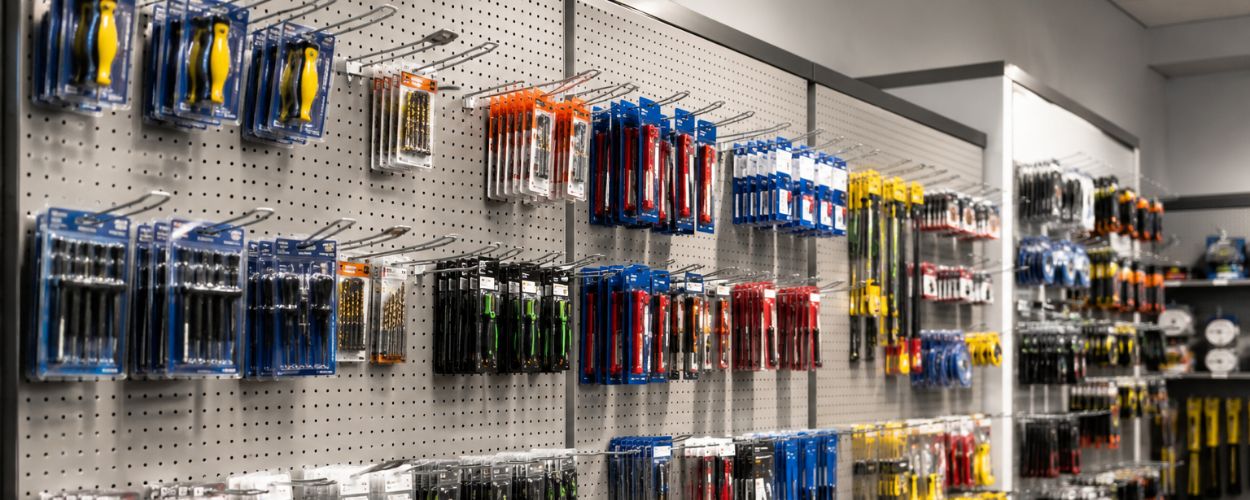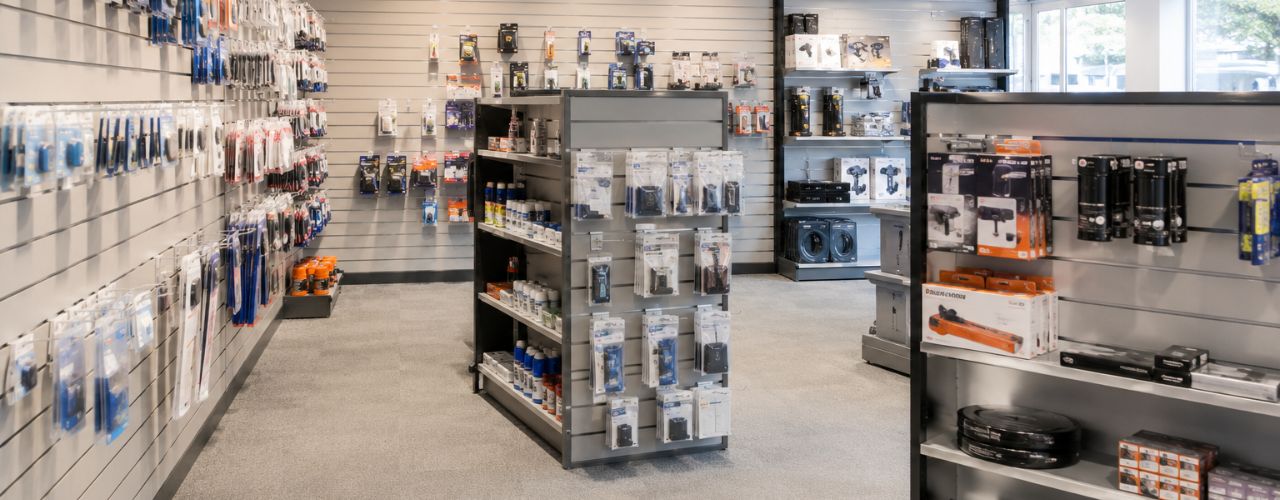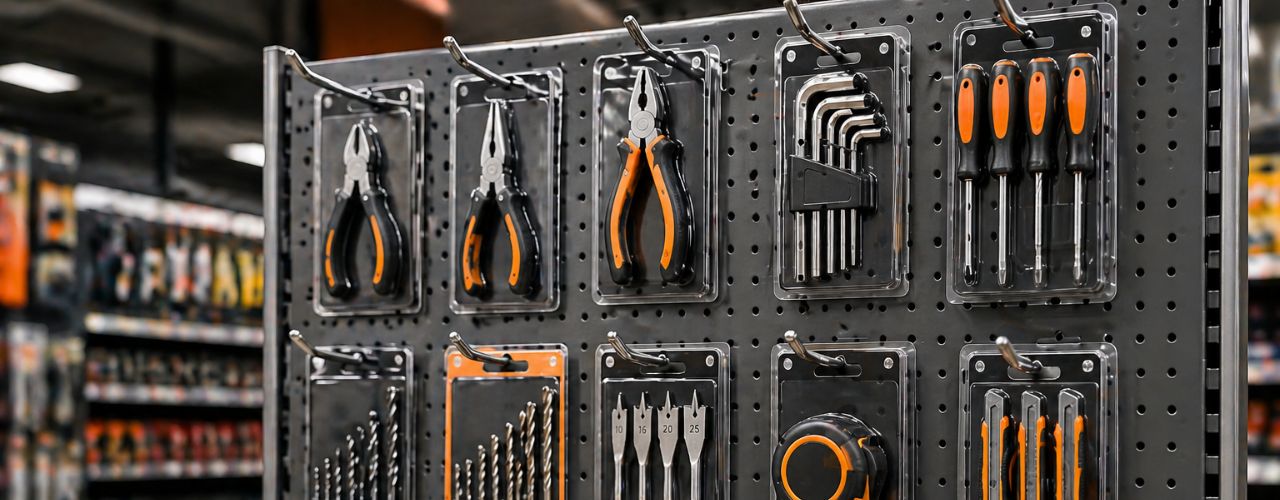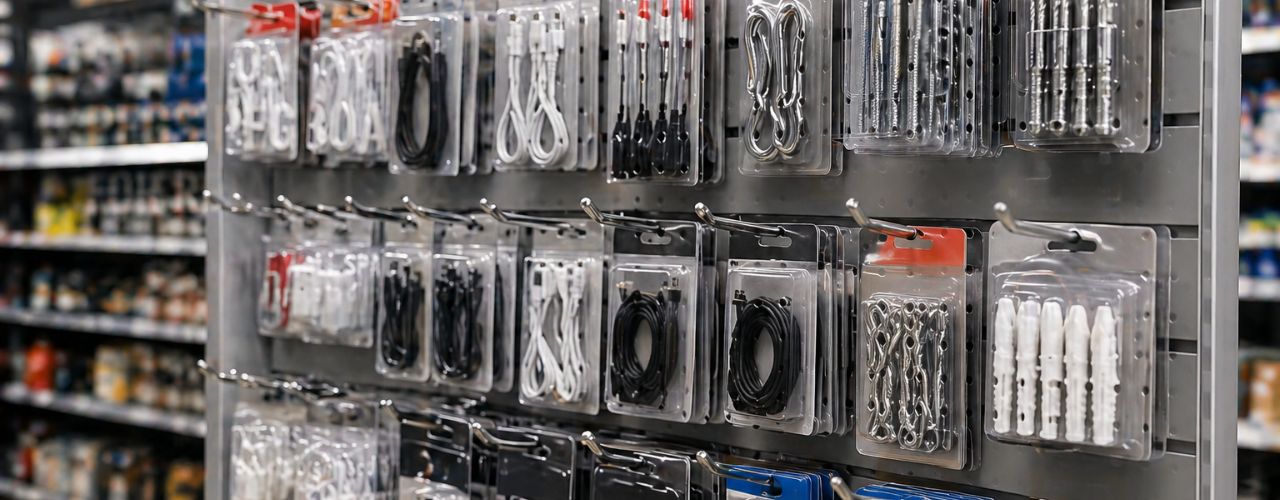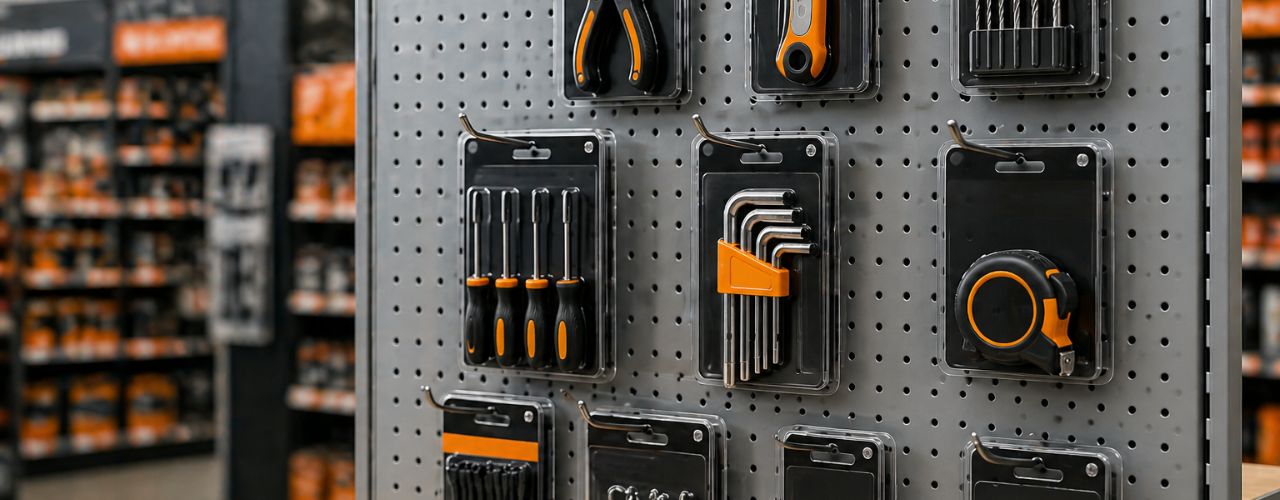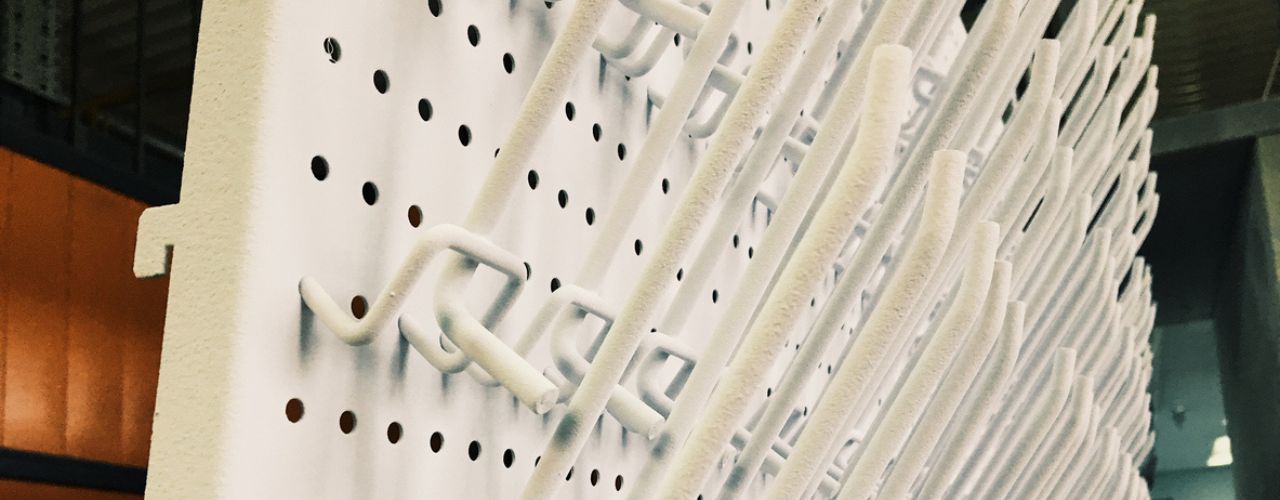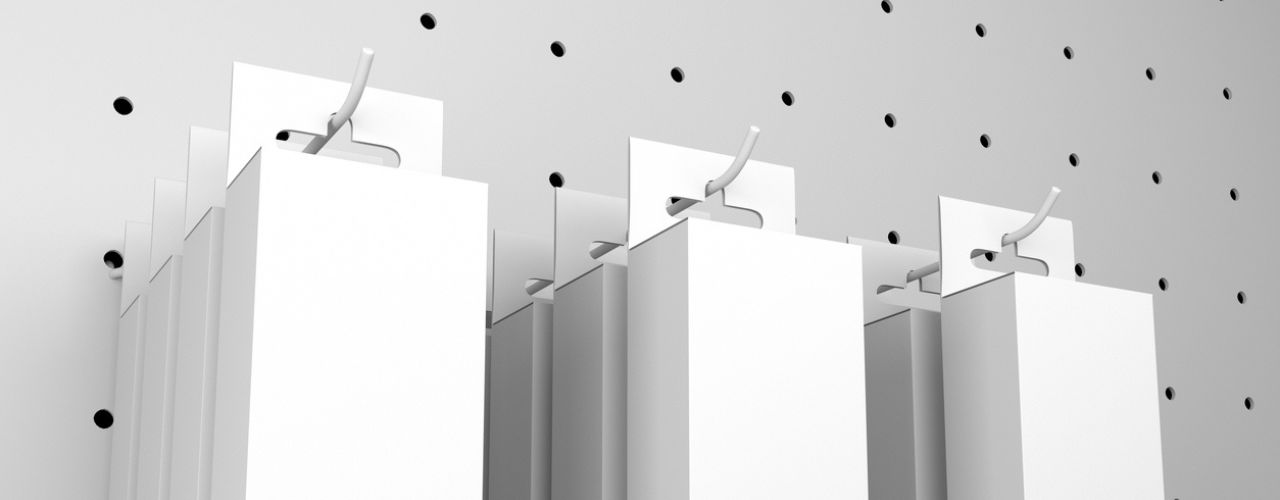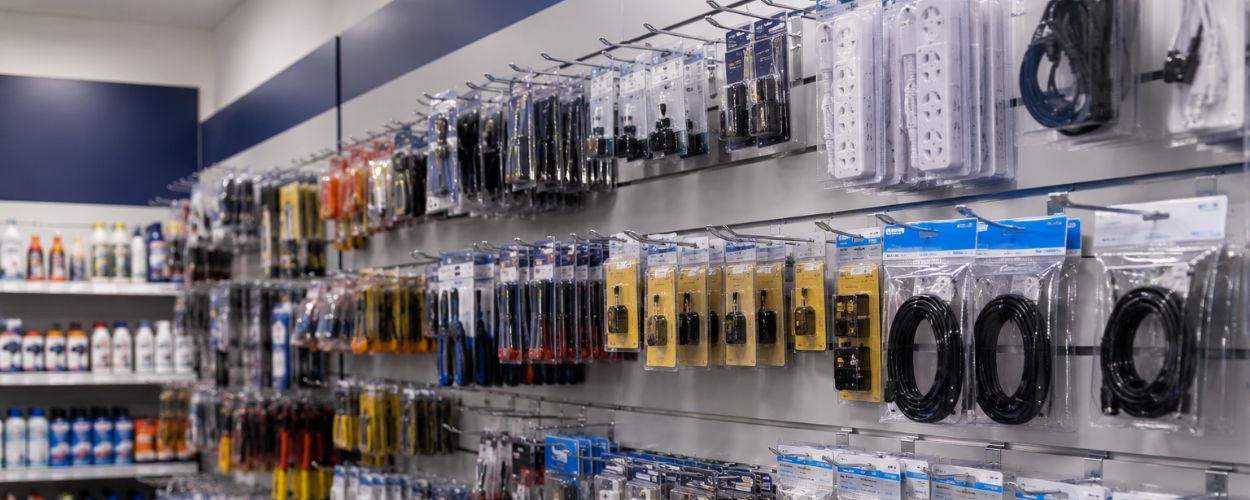
UK retail store using modern shop fittings with organised shelving and wall displays.

Shop Fittings UK: What Every Retailer Needs to Know Before Buying

The layout of a retail store is a powerful tool for influencing customer behaviour. Well-chosen fixtures guide shopper flow and decide whether a customer can find what they need. Before any major investment, a retailer must think about how their physical environment will support sales. Selecting the wrong type of shelving or display system can quickly lead to wasted space, poor presentation, and frustrated customers who leave without buying. Making informed choices ensures your investment pays off by creating an organised and commercially successful space.

How Can Your Store Layout Control Shopper Movement?

A customer’s journey through a store is rarely random. It is deliberately orchestrated by the placement of gondolas, racks, and wall displays. Creating defined pathways, starting with a decompression zone at the entrance and leading customers around the perimeter before they encounter the centre fixtures, is a proven technique to maximise exposure to high-margin items. Shop fittings UK are the essential physical elements that allow this control.

Using specific fittings to create barriers or bottlenecks can slow the shopper down at key decision points, such as near a till point or at the end of an aisle. This subtle guidance transforms passive browsing into active discovery, encouraging customers to see more of what you’ve got to sell. The placement must always be comfortable though, as an overcrowded space creates anxiety and drives shoppers away quickly.

Which Display System Suits Your Product Category Best?

Different products require fundamentally different presentation methods. A heavy-duty gardening tool cannot be displayed in the same way as a delicate piece of jewellery.

  • Apparel: Requires hanging rails, tiered tables, or mannequins to showcase the garment’s cut and fabric. Hooks and shelving are generally ineffective for clothing.
  • Electronics: Needs secure, locking cabinets or robust shelving capable of supporting weight and accommodating security tags without damaging the stock.
  • Small Accessories: Pegboard or slatwall systems are ideal, using hooks to present items individually, making them easy to pick up and examine.

This is why generic, off-the-shelf shelving often fails. It lacks the required flexibility and specialised design features necessary for specific retail sectors. The fixture must physically complement the item it holds.

Why is Customisation Necessary for Odd-Shaped Stock?

Many retail products do not conform to standard box or rectangular shapes. Items like sporting equipment or industrial parts require specialised solutions. Trying to force these items onto generic shelving creates messy, unstable displays. Shop fittings UK designed for adaptation allow retailers to use modular components, such as adjustable dividers, cantilevered shelves, or custom hook configurations.

For example, a retailer selling fishing rods needs a system that can securely hold long, slender items vertically without them slipping. A pet store stocking bulky bags of feed needs heavy-duty shelving that can withstand significant weight distribution. Investing in a system that can be specifically configured to the product’s dimensions ensures every item is presented securely and attractively, regardless of its unusual shape.

How Does Display Lighting Affect Buying Decisions?

Lighting is a deeply underappreciated element. Incorrect lighting can make high-quality products look dull, distort colours, and make labels hard to read. Conversely, integrated lighting, where LED strips are built directly into the shelving units draws immediate attention.

This strategic illumination guides the customer’s eye, often making a product seem more premium or desirable. When buying shop fittings UK, consider fixtures designed with channels or grooves that make adding discreet, low-voltage LED systems simple. Lighting should be treated as an extension of the display itself, serving to showcase the product.

What is the Lifespan of Retail Fixtures?

A component’s expected lifespan is a crucial consideration. Cheaply sourced fittings may offer immediate savings but often require replacement within a year or two due to bending, chipping, or premature failure. This generates unexpected operational costs and disrupts the sales floor when repairs are needed.

High-quality shop fittings UK, typically constructed from commercial-grade steel, powder-coated metals, or durable wood laminates, are designed for years of continuous use. They maintain their structure and finish even under heavy load and constant customer interaction. A long-lasting fixture provides better return on investment and ensures display continuity, contributing to a professional brand image over time.

For an in-depth consultation on optimising your specific retail floor plan and selecting materials that guarantee longevity, call our design experts today. We provide bespoke layout advice tailored to your market sector and stock volume.

How do Gondola Ends Influence Impulse Purchases?

The end of an aisle is one of the most profitable display areas in any store. Positioned at high-traffic intersections, these areas are primarily used to promote seasonal stock, clearance items, or high-margin impulse buys. The shop fittings UK used here must allow for maximum flexibility and rapid change.

An end cap must be able to convert from holding baskets of clearance items one week to supporting tiered shelving for confectionery the next. Fixtures for this area need quick-connect mechanisms that allow staff to dismantle and reconfigure the display in minutes, capturing sales opportunities as soon as they arise. These high-visibility zones are where adaptability directly translates into increased revenue.

What Factors Determine Fixture Load Capacity?

If shelving sags under a heavy weight, it immediately gives a negative impression of the store’s quality and professionalism. Load capacity is determined by the material gauge, the support structure, and the wall anchoring method.

  • Shelving: Heavy loads require reinforced steel brackets and thicker shelf material to prevent bowing in the centre.
  • Brackets: Must be tightly engineered to distribute weight evenly across the entire support channel, not just one point.
  • Wall Anchoring: Display walls must be secured directly into studs or joists, using heavy-duty bolts appropriate for the total estimated weight of the fixture and its full stock.

Fittings that are properly rated prevent operational failure and ensure the display always looks tidy and trustworthy.

Why is Modular Design Key to Futureproofing?

Retail is subject to market shifts and product trends. Buying fixed, specialised shelving can quickly become a liability if the business needs to pivot its product offering. Modular shop fittings UK provide the essential flexibility required to future-proof an investment.

A modular system uses interchangeable components, meaning the same back panel can accept hooks, shelving, baskets, or rail systems. This allows the retailer to completely transform the function of an entire wall section without having to replace the core fixture structure. That versatility is vital for startups and growing businesses which anticipate needing to modify their retail space frequently.

How do Fixtures Support Inventory Management?

Accurate stock control is significantly simplified by a well-organised display system. When products are neatly displayed on hooks or clearly arranged on shelves, staff can immediately identify gaps and low stock levels. This visible inventory reduces the time spent counting and searching for misplaced items.

  • Visibility: Clear sightlines prevent items from being accidentally overlooked or hidden behind other products
  • Organisation: Dedicated spots for every product minimise clutter and speed up the restocking process
  • Efficiency: Faster stock checks reduce the chances of running out of popular items, which directly prevents lost sales

Choosing the right shop fittings UK improves efficiency, allowing staff to spend less time on administration and more time assisting customers on the sales floor.

What is the Significance of Floor-to-Ceiling Solutions?

For smaller commercial units in the UK, it is imperative they use every available inch. While standard shelving often stops short of the ceiling, wasting valuable storage volume, floor-to-ceiling fittings allow retailers to reclaim this space.

While products at the highest levels are not easily accessible to customers, this area is perfect for storing overflow stock or bulky seasonal displays, dramatically reducing the need for backroom storage, which is an advantage in high-rent locations where every metre counts.

Find Your Retail Solution

Are you planning a new store fit-out or upgrading your current retail space? Get in touch with us today. We specialise in helping retailers across the UK select fixtures that are perfectly matched to their products and proven to drive commercial success.

Shop display hooks showcasing neatly organised retail products on a wall fixture.

Why the Right Shop Display Hooks Transform Retail Presentation

In retail, a customer’s decision to buy often depends less on the product itself and more on how it is presented. Using a wall moves products from overcrowded countertops or shelves and places them directly at eye-level. A well-designed display is like a silent salesperson, driving attention towards high-margin items and improving the overall shopping experience. Creating an environment that is easy to browse encourages customers to stay longer and spend more.

How Can Your Display Protect Margin on Small Items?

Retail success relies on clear presentation and ease of access. When a floor area is confined, especially in high-street shops, a wall becomes a premium resource. Maximising vertical space allows for every product to become visible, reducing the chance of missed sales simply because an item was tucked away.

How Does Wire Thickness Affect Weight Capacity?

The single biggest factor determining how much weight a fixture can safely support is the thickness, or gauge, of the wire used in its construction. Hooks made from a thinner gauge may be cheaper, but they quickly fail when repeatedly loaded with heavy packaged goods, leading to risk of collapse. Shop display hooks made from a heavier gauge steel maintain their shape and integrity under pressure. Choosing a heavier gauge for your shop display hooks system avoids costly replacements.

How do Hooks Stop Products Falling Down?

Product security is an underrated aspect of merchandising. If items frequently fall, it frustrates customers and damages stock, creating unnecessary waste. Hook design features like a slight upturn at the end, or a clip that locks the hook into the display board, prevent accidental dislodgement. Shop display hooks must hold their shape, even under the strain of being fully loaded.

Does Upfront Price Reflect the True Value?

When selecting retail fixtures, comparing the initial purchase price is a necessary first step. However, focusing only on the lowest upfront expenditure can lead to significant hidden costs over time. Cheaper alternatives often fail prematurely, requiring frequent replacement and disrupting displays. Shop display hooks manufactured using high-grade materials may have a higher price tag but this initial outlay is quickly offset by years of reliable service meaning a better total value for the retailer.

How Does Presentation Affect Shopper Buying Habits?

The way a product is presented plays an important role. A neat display instils confidence in the brand. When items are hung individually, they look more premium and appealing than when stacked in piles. Psychology suggests that a clear display removes mental friction for the shopper, making the selection process easier and encouraging movement from browsing to purchasing.

Can Hooks Improve Staff Replenishment Speed?

Inventory management can be time-consuming, but the right display system simplifies the process. When products are hung vertically, staff can instantly see which hooks need refilling, reducing the time spent searching for stock that is either low or empty. This ensures that items are always available when customers want to buy them. Shop display hooks that are quick to load, and unload, allow staff to focus on serving customers. Faster replenishment directly translates into less lost sales due to out-of-stock items.

For specialised guidance on how to configure your wall space to maximise product exposure, contact us today.

How do Fixtures Influence Customer Flow Patterns?

Store layout and the position of merchandise strongly influence how customers navigate the floor. By using wall systems and well-placed shop display hooks, you can guide shoppers along a specific journey, ensuring they encounter high-margin or promotional zones. Strategic placement near complementary product lines encourages cross-selling, keeping customers engaged with the merchandise for longer periods. This careful consideration of product placement ensures that the flow of foot traffic supports your sales objectives.

What Are the Options for Different Merchandise Weights?

Retailers stock items ranging from lightweight jewellery packets to heavy tools or electronics. One size of hook cannot handle this range. Therefore, a variety of hook styles must be used to match the product’s weight and shape. Shop display hooks in different gauges and lengths allow a retailer to match the strength of the hook directly to the needs of the product, providing security and preventing accidental drops.

Why Should You Invest in Backplates?

A display system that uses a single backplate design across multiple hook styles offers a significant operational advantage. It simplifies ordering, reduces inventory complexity for staff, and ensures compatibility if you switch between single, loop, or double hooks. This reduces the risk of staff using the wrong components, which can cause instability in the display. Shop display hooks with interchangeable backplates provide a level of futureproofing for your store, allowing you to change product lines or display boards easily over time.

How Can Security Tags be Integrated into Hooks?

The security of smaller, higher-value items is a constant concern for retailers. Modern shop display hooks are often designed to integrate with magnetic security systems. These systems prevent shoplifting by locking the product to the hook until an employee releases it at the point of sale. This feature is crucial for products like electronics accessories or expensive cosmetics. Integrating security directly into the fixture ensures that deterrence is built into the display itself, rather than relying on awkward external security devices.

Where do Pricing Strips Attach to Hooks?

The point of purchase is where many buying decisions are finalised, and clear pricing is essential here. The best shop display hooks are designed with integrated features that make attaching price labels or promotional tags straightforward. A clear plastic sleeve or a dedicated clip on the hook stem allows staff to update pricing quickly without obscuring the product itself. All necessary purchasing information is available exactly where the customer needs it, reducing customer frustration and cashier errors.

How to Choose the Right Fixture Type

Selecting the perfect fixtures for your store depends on the wall system you use and the type of product you sell. Matching the hook to the product ensures the display looks tidy and functions correctly for restocking.

  • Pegboard Hooks: These use small, round holes and often require a locking mechanism to prevent the hook from lifting out when a product is removed. They are highly popular for hardware and DIY stores.
  • Slatwall Hooks: Designed to fit into horizontal channels, these hooks are fast to move and reposition, making them ideal for constantly changing apparel or accessory displays.
  • Gridwall Hooks: These attach to wire mesh grids and are versatile for pop-up shops or temporary displays where portability is a requirement.

Ensuring you have the correct shop display hooks for your system is the first step to unlocking your wall space’s full potential.

Why Must Hooks Withstand Constant Customer Contact?

In a busy store, fixtures are subjected to continuous interaction. Customers pull products off hooks, staff restock them, and the entire unit may be bumped by trolleys or bags. The hook must be engineered to withstand this continuous use without bending or breaking. Shop display hooks that have been rigorously tested for load capacity and repeated stress outperform cheaper alternatives. Choosing superior quality means your displays remain functional and attractive, reducing the need for continuous maintenance and replacement costs.

Find the Right Fixtures

Ready to transform your merchandising strategy? Get in touch with us to receive specialised advice on the best shop display hooks for your store layout. We help retailers across the UK select fixtures that improve sales and enhance brand perception.

Organised slatwall display using euro hooks for retail products in a UK store.

Maximise Retail Space with UK Slatwall Euro Hooks

UK retail is competitive. Every square foot of display space needs to work hard. Wall areas in particular represent the most valuable, yet often underperforming, real estate in a store. Successfully selling small, packaged merchandise, like mobile phone accessories or hardware components, requires a tidy and highly adaptable display. Slatwall systems provide a clean presentation that supports high stock density. Focusing on vertical display allows you to take products off shelves or tables and place them directly in the customer’s sightline, guaranteeing full exposure.

Why Wall Space is the Most Valuable Asset

Effective retail display is the art of balancing high stock levels with an attractive layout. When floor space is limited, using walls allows retailers to present a wider range of products without sacrificing crucial walkways or creating confusion. Customers are naturally drawn to eye-level displays, making well-organised wall fixtures primary sales drivers. Achieving this balance requires fixtures that fit perfectly and perform consistently, allowing staff to manage stock quickly and without frustration.

How to Select the Right Hook Length

A hook that is too short limits the stock you can carry, forcing more frequent restocking. A hook that is too long protrudes excessively into the aisle potentially creating an obstruction for shoppers. The depth must be precisely matched to the size of the packaging and required stock capacity.

Selecting the right length of slatwall euro hooks ensures that you can maximise the number of front-facing products while maintaining a clean, straight line down the wall. The hooks must be sturdy enough to bear the weight of a full stack without bending or tilting, which is particularly critical for merchandising dense products such as batteries or heavy stationery items.

How do Euro Hooks Attach to Slatwall?

The quick installation of a display is a big advantage. Slatwall euro hooks feature a specific backplate or adapter designed to slot directly into the horizontal channels of a slatwall panel. No tools are needed for the attachment process. You simply tilt the hook, slide the backplate into the groove, and let it drop to lock into position. This provides immense adaptability.

If a product line is discontinued or moved, staff can adjust the layout in minutes. This is far superior to fixed wall fittings, which require drilling and patching whenever a display change is needed.

What is the Main Advantage for Small Retail Stock?

The design of slatwall euro hooks is suited for holding multiple small, packaged goods. The slight upward curl at the end of the hook helps prevent products from sliding off, even if the display is bumped.

With this, you can hang a substantial quantity of stock on each hook, significantly reducing how often you need to restock and keep shelves looking full during peak trading hours. By hanging products neatly, the accessories improve the presentation of smaller items that might otherwise look messy or disorganised on flat shelves.

Why Does Quick Repositioning Drive Sales?

Being able to rapidly change a display is important for taking advantage of sales trends or seasonal promotions. When a new shipment arrives, or a special offer launches, the entire wall layout can be reconfigured, and retailers can shift items to higher-visibility spots.

Placing related items such as phone cases next to charging cables can also encourage impulse purchases.

What Materials Guarantee Lasting Quality?

A display system’s value relies entirely on the quality of its components. Poor-quality hooks will bend, rust, or lose their shape quickly, leading to an unprofessional look and costly replacements.

Maximum longevity is achieved when slatwall euro hooks are constructed from hardened, electroplated steel. This guarantees the hook resists chipping and corrosion, even in high-traffic areas.

For a tailored consultation on optimising your store layout, including precise measurements and configuration strategies for your unique product range, contact us. We can help you transition to a more organised, higher-capacity system immediately.

How Can You Increase Display Capacity?

It requires using the full potential of slatwall euro hooks by combining hook types and integrating signage. The appearance of your fixtures also directly reflects your brand’s standards. Scratched, mismatched, or dull hooks create an image of neglect, undermining customer confidence.

A consistent finish on every slatwall euro hooks ensures that the customer’s eye is drawn to the product itself, not just to the hardware holding it. When the fixtures are discreet and high-quality, the presentation feels inviting. This detail supports the perception that you are a retailer who pays attention to every detail, building trust and encouraging purchases.

Do Hooks Offer Retailers Flexibility for Promotions?

Display fixtures play a crucial role in promoting specific lines. Slatwall euro hooks can easily integrate pricing strips, promotional tags, or sale signage directly onto the hook stem. This is extremely powerful for influencing shoppers at the point of decision.

Staff can update pricing or sales messaging quickly and with precision, ensuring that the display is always updated.

How do Hooks Assist with Inventory Management?

Accurate stock control is vital for profitability. Slatwall euro hooks facilitate this process by making product levels immediately obvious to staff. Any hook that is nearly empty signals an immediate need for replenishment.

  • The clear visibility reduces the time staff spend searching for stock
  • Products are less likely to be damaged when securely hung
  • Gaps in the display make stock levels clear during inventory counts

This transparency reduces the chance of items being out-of-stock, which is a key reason for lost sales.

What Alternatives Exist to Euro Hooks?

While slatwall euro hooks are the go-to solution for packaged merchandise, other styles exist for different needs. Loop hooks, for instance, are better for soft goods or specific tools, while display arms are preferred for hanging apparel or heavy boxed items. However, for sheer capacity and ease of stock management, the slatwall euro hook design is unmatched.

Where Should You Use Double Prong Hooks?

Choosing the right fixtures is a strategic retail decision. Double prong fixtures provide superior security and are best used for displaying items that are heavier, wider, or more valuable. Two points of contact prevent products from tilting or swinging away from the wall. They are particularly effective when the packaging is large or has an unusual weight distribution, ensuring the product always faces forward and presents correctly to the customer.

The ability to increase your display density and maintain a professional look depends heavily on high-quality hardware. Investing in such a display system means investing in full product exposure and a more streamlined operation.

Get Expert Display Advice

Ready to upgrade your merchandising strategy? Get in touch with us to receive specialised advice on the best slatwall euro hooks for your store layout.

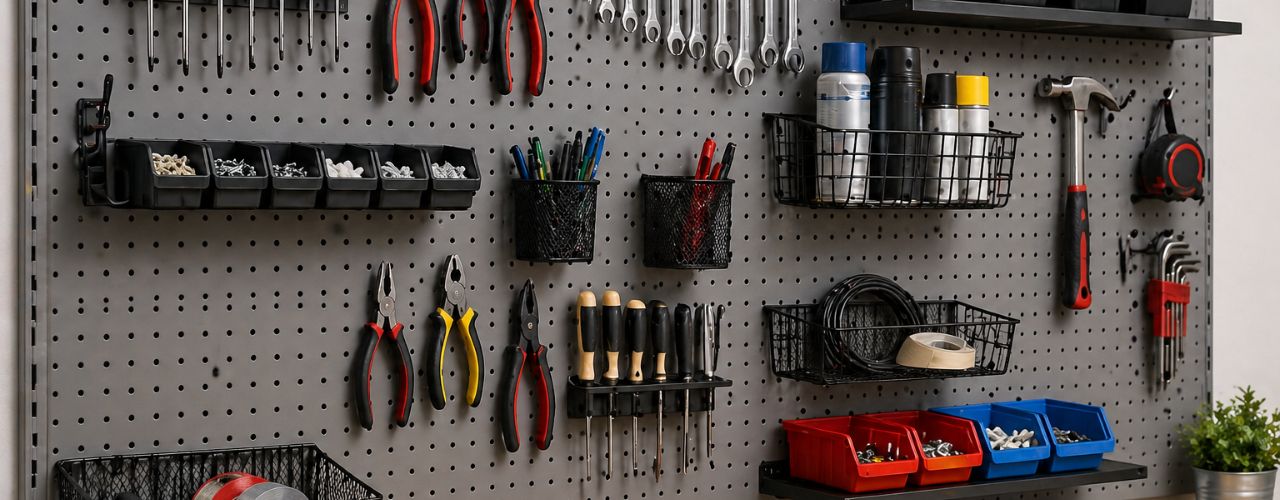
Efficiently organised tools on a pegboard using hooks and accessories for workshop or home storage.

Organise Your Tools Efficiently with Simple Pegboard Hooks

A cluttered workspace directly translates to lost time and unnecessary frustration. Searching for a misplaced spanner or saw can break your flow when working on DIY, trade, or garden tasks. Well-ordered systems are a fundamental requirement for any successful project. Pegboards take wall space, a surface often forgotten, and turn it into a high-functioning storage area that keeps every item visible and accessible. Creating a focused, productive environment starts with installing the right fixtures.

How Can Your Workspace Stop Wasting Time?

Wasted time is the single biggest drain on any project. People often underestimate how much time they spend simply looking for tools they know they own. Stacking items into drawers or boxes seems tidy, but it slows you down every time you open the box. A pegboard system removes this issue entirely by employing vertical storage.

Everything is clearly displayed against the wall, reducing the mental strain of remembering where you placed a hammer or finding the right drill bit. Clear organisation means you move faster from one task to the next, increasing your output and freeing up valuable floor or bench area. When your workspace is clear, your mind is too, allowing you to focus purely on the work at hand.

How do You Create a Visible Tool Inventory?

Visibility means that you immediately spot missing items and know precisely when a tool has not been returned to its correct place. Grouping items by their function creates distinct zones on the wall and the separation reinforces memory while quickening retrieval. Using labels beneath the pegboard hooks makes it impossible to misplace any item.

A single colour scheme for your accessories also contributes to a clean look. By choosing fixtures with a bright, consistent finish, such as polished zinc or chrome, the hooks themselves fade into the background. The design allows the tool to become the focus. You will find that high quality pegboard hooks often come in durable finishes.

How Should You Group Your Tools?

Good organisation is about using the space you have more wisely. A pegboard allows you to categorise tools intuitively, grouping all your garden shears on one section, your spanners on another, and your power drill accessories on a third. This puts everything you need for a job within immediate reach.

  • Organise tools by use frequency, placing the most-used items at chest height
  • Outline tool shapes onto the board with a fine marker to clearly show the designated place for each item
  • Ensure the lighting in your workshop illuminates the board directly

Which Material Quality Offers True Tool Protection?

Tool storage needs to protect the investment you have made in your equipment. Poorly made hooks can bend, scratch tools, or fall out of the board, leading to damage. The material a hook is manufactured from is the defining factor in its performance and longevity.

Why Does Hook Quality Affect Safety?

Unlike typical metals that can quickly corrode when exposed to the damp air of a garage or shed, galvanised steel maintains its integrity, ensuring the hook will not fail under load. This material has been treated with a protective zinc coating, providing a strong barrier against moisture and environmental damage.

Choosing quality fittings provides stability. Tools are often heavy and have sharp or delicate components that need secure placement. A premium steel hook will not wobble or sag over time, which is vital for safety, preventing heavier items from dropping off the board and causing injury or damage to what’s stored below.

What Specific Hook Styles Suit Garden Tools Best?

For garden equipment, you need adaptable solutions that accommodate long handles and bulky heads. Typical straight hooks are insufficient for these tasks.

A large, unwieldy hedge trimmer needs a different fixture to a small pair of secateurs. Matching the hook to the tool ensures it sits flush against the board, using the vertical space with maximum effectiveness. By choosing the right pegboard hooks, you transform a chaotic tool pile into an orderly gallery.

If you are unsure how to match a heavy-duty tool with a specific hook style, or if you need bespoke advice on the structural capacity of your installation, our experts can help. We provide specialised guidance on the precise load ratings and material choices for any workshop application.

Need a dedicated solution for your workshop storage needs? Contact us today about a tailored configuration that protects your valuable tools and optimises your workflow.

Understanding Different Hook Types

The most practical types of pegboard hooks for garden tools are:

  • Curved Hooks: Ideal for hanging rakes, spades, and forks by their necks or handles. The rounded shape prevents sharp edges on tool heads from being damaged.
  • Double-Prong Hooks: Perfect for securing items with pre-drilled holes in the handles, such as trowels or hand cultivators. They offer twin-point support, stopping the tool from spinning or sliding.
  • J-Hooks: These work well for hoses, coiled ropes, or electrical cables. Their simple, deep curve provides a neat, closed storage point that prevents items from unravelling.

Does Standard Spacing Work for Every Power Tool?

The typical distance between holes is sufficient for small hand tools and lighter equipment. However, when you introduce bigger power tools, you may need to adjust your approach.

A large impact driver or a belt sander, for example, occupies a significant amount of space. Using typical pegboard hooks often means the hook for the next tool must skip one or two holes to allow the first tool clearance to hang without obstruction. This situation is especially true for items with awkward battery packs or handles that protrude significantly. You must plan the layout to accommodate these sizes.

To solve this, look for pegboard hooks that come in varied lengths. Longer hooks extend further from the wall, allowing tools to hang without interfering with items stored directly above or below. Alternatively, you can opt for larger pegboards that have a wider overall surface area, allowing more breathing room between tools. This means every item is easy to grab without knocking three others down.

What Setup Maximises Wall Area for Workshops?

Workshops, especially in the UK, are often limited in size, making productive use of wall area a premium concern. Pegboards are space-saving, but certain design techniques can increase their capacity.

Layering involves using the wall surface not just for hooks, but also for mounting small shelves directly onto the pegboard. It allows you to store small parts like screws, nails, or washers in containers, utilising the dead space that would otherwise be wasted.

How do You Integrate Small Parts Storage?

Small, open-loop hooks are excellent for holding Allen keys, individual drill bits, or small wrenches. These fittings take up only a fraction of an inch of board space but make tiny, easily lost items completely visible. For optimal wall usage, consider mounting a second, smaller pegboard panel directly next to the main one, dedicated only to these minor items. Always make sure the pegboard hooks are rated correctly.

Remember that a well-designed board also includes negative space around key tools. This breathing room makes it easy to take out and put back heavy items without the risk of collision.

Can Pegboards Handle Heavy Duty Items Securely?

While a typical board and hook may struggle with a heavy duty item, a pegboard is fully capable of securely supporting significant loads, provided the correct hardware is selected. This is where material strength and mounting method become important.

The weight capacity is primarily determined by the hook material how the board is fixed to the wall. Using premium pegboard hooks made from thicker steel vastly increases the load-bearing capacity.

How Should You Anchor Your Board?

The mounting must also be secured using appropriate anchors. Heavy duty pegboard hooks designed for industrial use can often support more weight than the board itself. Many manufacturers rate their hooks for specific maximum weights, allowing a user to calculate the load limits for each section accurately.

Do not let your work suffer due to inadequate storage. The right fixtures turn a messy corner into a streamlined, high-performance workstation.

Find Tailored Storage Advice

Ready to transform your workshop with a bespoke storage system? Get in touch to discuss your specific requirements and receive tailored advice on the best hook styles for your tools today.

Organised pegboard with hooks, bins, and trays showing efficient storage for home and retail displays

Top Pegboard Peg Ideas to Organise Home or Retail Displays

Euro hooks are a small change that can make a big difference to how your products look and sell. They keep packaging tidy, present items in neat rows, and make planograms simple to execute. If you run a convenience store, a pharmacy, a DIY aisle, or a showroom with blister packed goods, the right euro hooks turn messy shelves into an organised, eye-level display that encourages customers to pick up more.

Below you will find a practical guide to choosing euro hooks that fit your fixtures, carry the right load, and work day after day. You will also learn how to size hooks to the product, set planograms that move stock, and keep everything compliant with your store standards.

What are Euro Hooks?

Euro hooks are a metal display hook with two prongs at the back and a single forward arm for product. The two prongs sit through pegboard or slatwall to spread the load and keep the hook steady. Most versions also accept a label holder or ticket plate at the front so you can price, barcode, or highlight an offer.

Common features include:

  • Twin back prongs for secure fixing
  • Forward arm in straight or upturned tip versions
  • Ticket plate or scanner arm for labels
  • Bright zinc-plated or chrome finish
  • Wire diameters from light duty to heavy duty
  • Lengths from short stubs to deep arms for bulk stock

Get Compatibility Right First Time

Before you pick any euro hook, confirm that it fits the board or panel you already have. A quick check saves time and returns. Use this checklist.

Panel type

  • Pegboard
    • Typical hole spacings include 25 mm and 32 mm centres.
    • Hole diameters often range around 5 mm to 6 mm.
    • Choose euro hook prongs that match the hole size so the fit is snug.
  • Slatwall
    • Hooks use a backplate that locks into the slat.
    • Measure the slot height and lip thickness. Most commercial panels follow common dimensions, but older panels can vary.

Wire diameter

  • Light presentation: around 4 mm wire suits small carded items.
  • General retail: around 4.8 mm to 5 mm works for most packaged goods.
  • Heavy duty: 6 mm or more for tools and metal parts.

Backplate style

  • Twin prong for pegboard. Spreads the load and reduces wobble.
  • Single prong for very light items or where space is tight.
  • Slatwall backplate for panels with horizontal grooves. Look for welded plates for strength.

Ticketing

  • Flipper label holders clip to the front and swing when customers browse.
  • Scanner arms hold long labels for barcodes and promotional messages.
  • Data strips keep pricing consistent along a bay.

Choose the Right Length

Hook length affects product capacity, facing count, and how easy it is for shoppers to grab items. You will find common lengths such as 50 mm, 100 mm, 150 mm, 200 mm, 250 mm, and 300 mm. Use a simple method to size correctly.

  1. Measure pack thickness at the hanging point.
  2. Decide on the number of items per hook you want to present.
  3. Add clearance for the upturned tip and a little finger room.

Capacity guide

  • Capacity ≈ (usable hook length) ÷ (pack thickness)
  • Usable length is the hook length minus around 30–40 mm for the tip and label holder.

Example
If your blister pack is 25 mm thick and you use a 200 mm hook, usable length might be 160 mm.
Capacity ≈ 160 ÷ 25 = 6 items per hook.

Good practice

  • Avoid loading to the very end. Leave room for easy pick-up.
  • Use shorter hooks on eye-level shelves for tidy lines.
  • Reserve longer hooks for bulk stock lower down.
  • Keep neighbouring hooks the same length to stop tags clashing.

Materials and Finishes That Last

Most euro hooks use mild steel wire with a protective finish. Your choice affects appearance and durability.

  • Zinc-plated finish
    • Bright silver look that suits most stores
    • Resists corrosion in normal indoor conditions
    • Easy to wipe clean
  • Chrome finish
    • Mirror-like shine for premium bays
    • Good scratch resistance
    • Costs a little more
  • Powder-coated colour
    • Useful for brand blocks or to match corporate colours
    • Helps segment categories
    • Check that the coating does not increase the wire diameter too much for your pegboard holes

If you run a garden centre or a store with damp air near entrances, inspect hooks regularly. A zinc-plated finish is usually more than adequate for indoor retail, but any sign of corrosion means it is time for replacements.

Backplates and Fixing Options

The back of the hook does more work than many people realise. The right design stabilises the display of euro hooks and protects the panel.

  • Standard twin prong for pegboard. The most common choice and suitable for the majority of items.
  • Reinforced twin prong with a welded crossbar for added stiffness. Helpful for hooks 250 mm and longer.
  • Wide backplate for slatwall that spreads the load. Look for a positive lock that clicks into the groove.
  • Magnetic backplates for metal surfaces such as gondola end caps. Handy for pop-up displays.

Do a quick test. Load a sample hook and try to move it from side to side. If the tip drifts when customers take items, look for a reinforced design or shorten the length.

Planogram Basics for Euro Hooks

Use these simple rules to turn a bank of euro hooks into a sales-ready planogram.

  • Place best sellers close to eye level to increase pick-up.
  • Keep each brand or family in a vertical block so shoppers can compare strengths, flavours, or sizes quickly.
  • Use short hooks for top shelves so labels line up.
  • Use longer hooks lower down for holding more stock on promotion.
  • Start with three to five facings for a hero item, then adjust when you review sales.
  • Keep hooks aligned. Uneven heights make pricing hard to read.

Simple review cycle

  1. Photograph the bay when full.
  2. Revisit after one trading week.
  3. Note which hooks are empty first.
  4. Increase facings for those lines or move them up a shelf.
  5. Keep a record to guide your next range review.

Maintenance That Keeps Displays Selling

Hooks work hard every day. A five-minute weekly routine keeps standards up.

  • Wipe euro hooks and ticket holders with a damp cloth.
  • Replace cloudy or cracked label windows.
  • Push items forward so every hook shows stock at the front.
  • Check for bent tips after heavy deliveries.
  • Verify that promotional pricing matches the till.
  • Record any low stock on the planogram sheet.

At Foxbarn Limited, we manufacture and stock a wide range of euro hooks, backplates, ticketing solutions, and accessories in the UK. Our automated production and large local inventory mean you can get the exact sizes you need on dependable lead times. If you want help checking compatibility or building a euro hook list for a full aisle, our team can specify the right wire gauge, lengths, and ticket holders to suit your planogram and your budget.

Upgrade Your Fixtures with Foxbarn

Need the right Euro hooks for your store? Foxbarn supplies a complete range of display hooks, fixtures, and accessories for pegboard, slatwall, and grid systems, all engineered for reliability and retail performance.

Contact our team today to find the perfect fit for your retail display.

selecting slatwall hooks that maximise wall space and improve retail display efficiency

Maximise Your Wall Space with Slatwall Hooks That Sell

Slatwall hooks turn empty wall panels into hard-working selling space. They keep products tidy, make pricing clear, and allow fast planogram changes without tools. If you run promotions, seasonal ranges, or frequent new lines, a well planned set of hooks lets your team rework a bay in minutes. This guide explains how to choose slatwall hooks that fit your panels, carry the right load, and help customers find what they want quickly.

Understand Your Slatwall Panel

Before you order any hook, confirm how your panels are built. A quick check prevents returns and wobble on the shop floor.

  • Measure the slot height and the lip thickness
  • Check the board thickness and material
  • Inspect a used panel for damage around the grooves
  • Test one hook to confirm a positive lock and clean removal

Many UK panels follow common groove sizes, yet older installations can vary. If you plan to share accessories across stores, note the smallest slot height and choose backplates that lock cleanly in all locations.

Pick The Right Hook Type

Slatwall hooks come in several patterns. The best choice depends on the item weight, packaging, and how you want the shelf to look.

  • Straight single hooks for carded and bagged products
  • Upturned tip hooks to stop items sliding forward
  • Heavy duty hooks in thicker wire for tools and metal parts
  • Euro hooks with a ticket plate welded to the front
  • Loop hooks for items with handles
  • Waterfall arms for garments and accessories
  • Face outs for boxed items or hanging multipacks

Ask yourself what action you want the shopper to take. Do you want them to grab a single item quickly, compare several flavours at a glance, or browse across sizes. The hook style should support that action with no fuss.

Choose Lengths That Match Your Stock

Length controls capacity and the look of the bay. Short slatwall hooks present neat, shallow rows at eye level. Longer slatwall hooks hold bulk stock low on the panel.

Simple sizing method:

  • Measure pack thickness at the hanging point
  • Decide how many items you want on one hook
  • Multiply thickness by quantity
  • Add around 40 mm for the tip and finger room
  • Choose the next standard length up, such as 100, 150, 200, 250, or 300 mm

Example: a 24 mm thick blister pack presented seven deep needs about 24 × 7 = 168 mm, plus 40 mm clearance. Pick a 200 mm slatwall hook.

Match Wire Gauge To Load

Wire thickness drives strength. It also affects how the hook looks on the wall.

  • Light duty around 4 mm for small carded goods
  • General duty around 4.8 to 5 mm for most retail lines
  • Heavy duty around 6 mm for tools and dense metal parts

Test with real product. Load the hook fully and check for deflection. If the tip drops, shorten the length or step up a gauge. A tidy, level presentation builds confidence in the range.

Choose Finishes That Last

Finish matters for both appearance and cleaning. Most stores use one finish across a bay for a consistent look.

  • Bright zinc-plated for a clean silver tone and easy maintenance
  • Chrome for a premium, mirror-like appearance
  • Powder-coated colour to signpost categories or brand blocks

If your entrance brings in damp air, inspect hooks regularly and wipe them with a mild cleaner. Replace any hook that shows damage or rough edges.

Use Backplates That Lock Securely

The backplate carries the load and protects the panel. Look for a positive lock that sits firmly in the groove without rocking.

  • Standard slatwall backplates for general displays
  • Wide backplates to spread loads on longer slatwall hooks
  • Anti-lift designs to resist tampering in high-risk aisles

Do you see hooks lifting when customers remove an item. A better backplate with a deeper lip often removes the problem.

Plan Ticketing For Fast Price Changes

Clear pricing reduces questions and speeds up shop floor work. Design the ticketing once, then repeat it across bays.

  • Flipper label holders that clip to the front of the slatwall hook
  • Scanner arms that bring longer labels forward for barcodes
  • Magnetic frames for temporary signs on metal back panels
  • Data strips on shelves and baskets for a uniform look

Set one label height and font across the category. Check visibility from one metre. If staff struggle to read a price, the customer will too.

Build A Merchandising Layout That Works

A slatwall bay can move stock quickly if you set simple rules and follow them week after week.

  • Put best sellers at eye level for fast pick-up
  • Keep each brand or variant in a clear vertical block
  • Short hooks up high for tidy lines and easy pricing
  • Longer hooks on lower rows for capacity during promotions
  • Reserve a basket or shelf for bulky or irregular packs
  • Leave at least a hand’s width between neighbouring hook tips

A small trial helps. Photograph the bay full at the start of the week and again after three busy days. Which hooks look empty first. Increase facings on those lines or move them to a higher shelf to reduce restocking runs.

Improve Space Productivity With Simple Numbers

Wall space works best when you link slatwall hook choices to demand. You can use two quick calculations.

  • Capacity per hook ≈ usable length ÷ pack thickness
  • Days of cover ≈ total units across facings ÷ daily sales

Example: five facings of a product with six units per slatwall hook equal thirty units on display. If you sell eight units per day, you hold just under four days of cover. Increase length or add a facing before peak weeks so the shelf survives the afternoon rush.

Keep Your Bay Performing With Simple Maintenance

Five minutes a day avoids big tidy-ups at the weekend.

  • Wipe hooks and ticket holders with a damp cloth
  • Push stock forward at the start of each shift
  • Replace cloudy label windows
  • Check for droop on long, heavy hooks
  • Verify that promotional prices match the till
  • Keep a small kit of spare slatwall hooks and labels on site

Do you track a weekly list of display fixes. A short checklist helps managers catch recurring issues and plan a smarter order next month.

Buying Checklist

Use this list to prepare your next order.

  • Panel slot height, lip thickness, and condition
  • Hook types and lengths by product family
  • Wire gauges to match load
  • Backplate style and any anti-lift requirement
  • Label holders and scanner arms with agreed ticket sizes
  • Finishes to match the bay design
  • Security fittings for target SKUs
  • Spare slatwall hooks and windows for maintenance
  • A simple drawing that assigns lengths and counts per shelf

Transform Empty Walls into Selling Space with Foxbarn

Want to make your slatwall panels work harder? Contact Foxbarn for expert advice on choosing slatwall hooks that fit perfectly, carry the right load, and look professional. Foxbarn offers a complete range of display hooks, fittings, and accessories, manufactured in-house for quality, consistency, and fast delivery.

pegboard accessories for creating efficient, well-organised displays and workspaces

Best Pegboard Accessories to Organise Your Display or Workspace

Pegboard accessories give you a tidy and flexible way to show products or store tools without wasting space. You can rearrange a bay in minutes, keep pricing consistent and guide customers to the right choice. The right fittings also make workshop walls safer and faster to use. This guide covers the most useful pegboard accessories for UK fixtures, how to pick sizes that fit and the small details that make a big difference to day-to-day work.

Know Your Board And Spacing

Before you choose accessories, confirm the board standard you use. Getting this right means everything fits first time and sits level. UK retail boards commonly use twenty-five-millimetre centres with hole diameters around five to six millimetres, and panels are usually MDF, metal or laminate. Twin prongs spread load and reduce wobble. If you also run slatwall, look for ranges that offer both prongs and backplates so pegboard accessories can move between fixtures when you shuffle ranges for the season. Two quick questions help you order with confidence. What is your peg spacing and hole size. Do you plan to move the same product between pegboard and slatwall.

Euro Hooks For Everyday Merchandising

Euro hooks are the workhorse of pegboard displays. They keep carded packs in neat lines and put every barcode in a scan friendly place. Choose a wire diameter that matches the load, around four to five millimetres for most grocery and health lines and six millimetres for heavier tools. Common lengths run from fifty to three hundred millimetres. Upturned tips stop items sliding off. Add flipper label holders or scanner arms to keep pricing consistent across the bay. These simple pegboard accessories deliver clear facings, faster planogram changes and less cleaning because products do not sit on flat shelves.

A Practical Sizing Method

Measure pack thickness at the hang slot, decide how many items you want on one hook, multiply thickness by quantity and add about forty millimetres for the tip and finger room. Then choose the next standard length up. This keeps lines tidy and prevents overloading.

Prong Arms For Heavier Loads

Prong arms look similar to euro hooks but use heavier wire and often a reinforced backplate. They suit tools, metal parts and bagged hardware. Choose five-to-six-millimetre wire for strength and lengths of one hundred and fifty to three hundred millimetres depending on pack depth. Add hook locks or collars for items at risk of theft. Test a fully loaded arm on your own board to confirm it stays level. If long hooks droop by the end of the week, a move to a heavier prong arm or a shorter length usually solves it. These sturdier pegboard accessories keep heavy stock safe and stable.

Wire Baskets And Bins For Loose Items

Not every product hangs neatly. Wire baskets and bins hold irregular shapes, multipacks or items that shoppers like to rummage through. Use shallow baskets for small parts near eye level, deep bins for bulk stock low on the bay and ticket holders on the front rail for clear pricing. Drop in dividers separate variants without visual clutter. In busy stores these pegboard accessories make top up easy because staff can tip a case straight in without arranging individual packs.

Shelves And Brackets For Boxes And Bottles

Shelves extend what a pegboard can carry. Use straight shelves for general use and angled shelves to display the front of a pack. Acrylic fronts or wire lips stop items slipping and clip on price rails keep ticketing aligned. Measure shelf width so it does not block neighbouring hooks and keep heavy loads near waist height so staff can lift safely. As pegboard accessories go, shelves are the quickest way to add capacity for box sets or fragile items.

Trays And Scanner Arms For Tidy Ticketing

Ticketing is part of the experience for both stores and workshops. When labels are easy to read, customers spend less time searching and teams make fewer picking mistakes. Flipper label holders clip to hook tips and swing when browsed. Scanner arms sit forward of the product for long labels and barcodes. Shelf edge price rails push on to wire fronts and magnetic frames stick to metal back panels for temporary signs. Set one ticket size for the whole bay and check you can read every price from one metre away. If not, increase label size or bring it forward on a scanner arm. These pegboard accessories keep information consistent and clear.

Specialist Holders For Tools And Consumables

Kit out a tool wall with holders designed for specific shapes. That keeps sharp edges safe and stops heavy items twisting off a simple hook. Single and double holders suit hammers and mallets, plier racks keep tools upright for quick pick up, drill bit racks use stepped holes by diameter, spray can rings and bottle clips secure aerosols and lubricants and peg cups store loose fasteners and cable ties. In a retail setting, specialist pegboard accessories lift perceived value because the display looks ordered. In a workshop, they save minutes every day which adds up across a week of tasks.

Security Fittings For High Value Lines

Some ranges need extra control. You can add low profile security without spoiling the display. Hook locks with a simple key open only for staff, locking collars behind the front pack reduce quick grab theft, concealed fixings on slatwall backplates discourage tampering and tethered sample holders work well in try before you buy areas. Use these pegboard accessories where shrink has been a problem or where small premium parts sit near the entrance. Keep a spare key at the service desk and one with the duty manager.

Build A Fast Flexible Pegboard Bay

A good bay starts on paper. Measure the space, list the products and choose accessories that match the pack type. Group by brand or function in vertical blocks, keep best sellers around eye level, use short hooks up high and long hooks low, reserve a basket or shelf for awkward shapes, place scanner arms where you need longer labels and leave a clear working gap at the bottom for cleaning. Photograph your bay at full and half stock. Comparing those photos shows the points that look messy. Place a divider or switch to a basket at those points. Well chosen pegboard accessories make these adjustments quick and repeatable.

Simple Checklist Before You Order

  • Confirm board spacing and hole diameter
  • Decide the mix of euro hooks, prong arms, baskets and shelves
  • Add scanner arms and price rails for consistent ticketing
  • Include specialist holders for your top ten tools or products
  • Plan security fittings for high value items
  • Order a small buffer of spare parts for quick fixes

This checklist keeps your pegboard accessories aligned with real world tasks and reduces downtime when you refresh a bay.

Upgrade Your Pegboard Setup with Foxbarn

Ready to enhance your display or workspace? Contact Foxbarn and get expert help choosing the right accessories for your setup. Foxbarn supplies a complete range of pegboard accessories, from euro hooks and baskets to shelves and tool holders, all built for durability and a perfect fit across UK board standards.

Euro hooks neatly displaying packaged products on a retail pegboard

Upgrade Your Store Fixtures with Euro Hooks That Work

Euro hooks are a small change that can make a big difference to how your products look and sell. They keep packaging tidy, present items in neat rows, and make planograms simple to execute. If you run a convenience store, a pharmacy, a DIY aisle, or a showroom with blister packed goods, the right euro hooks turn messy shelves into an organised, eye-level display that encourages customers to pick up more.

Below you will find a practical guide to choosing euro hooks that fit your fixtures, carry the right load, and work day after day. You will also learn how to size hooks to the product, set planograms that move stock, and keep everything compliant with your store standards.

What are Euro Hooks?

Euro hooks are a metal display hook with two prongs at the back and a single forward arm for product. The two prongs sit through pegboard or slatwall to spread the load and keep the hook steady. Most versions also accept a label holder or ticket plate at the front so you can price, barcode, or highlight an offer.

Common features include:

  • Twin back prongs for secure fixing
  • Forward arm in straight or upturned tip versions
  • Ticket plate or scanner arm for labels
  • Bright zinc-plated or chrome finish
  • Wire diameters from light duty to heavy duty
  • Lengths from short stubs to deep arms for bulk stock

Get Compatibility Right First Time

Before you pick any euro hook, confirm that it fits the board or panel you already have. A quick check saves time and returns. Use this checklist.

Panel type

  • Pegboard
    • Typical hole spacings include 25 mm and 32 mm centres.
    • Hole diameters often range around 5 mm to 6 mm.
    • Choose euro hook prongs that match the hole size so the fit is snug.
  • Slatwall
    • Hooks use a backplate that locks into the slat.
    • Measure the slot height and lip thickness. Most commercial panels follow common dimensions, but older panels can vary.

Wire diameter

  • Light presentation: around 4 mm wire suits small carded items.
  • General retail: around 4.8 mm to 5 mm works for most packaged goods.
  • Heavy duty: 6 mm or more for tools and metal parts.

Backplate style

  • Twin prong for pegboard. Spreads the load and reduces wobble.
  • Single prong for very light items or where space is tight.
  • Slatwall backplate for panels with horizontal grooves. Look for welded plates for strength.

Ticketing

  • Flipper label holders clip to the front and swing when customers browse.
  • Scanner arms hold long labels for barcodes and promotional messages.
  • Data strips keep pricing consistent along a bay.

Choose the Right Length

Hook length affects product capacity, facing count, and how easy it is for shoppers to grab items. You will find common lengths such as 50 mm, 100 mm, 150 mm, 200 mm, 250 mm, and 300 mm. Use a simple method to size correctly.

  1. Measure pack thickness at the hanging point.
  2. Decide on the number of items per hook you want to present.
  3. Add clearance for the upturned tip and a little finger room.

Capacity guide

  • Capacity ≈ (usable hook length) ÷ (pack thickness)
  • Usable length is the hook length minus around 30–40 mm for the tip and label holder.

Example
If your blister pack is 25 mm thick and you use a 200 mm hook, usable length might be 160 mm.
Capacity ≈ 160 ÷ 25 = 6 items per hook.

Good practice

  • Avoid loading to the very end. Leave room for easy pick-up.
  • Use shorter hooks on eye-level shelves for tidy lines.
  • Reserve longer hooks for bulk stock lower down.
  • Keep neighbouring hooks the same length to stop tags clashing.

Materials and Finishes That Last

Most euro hooks use mild steel wire with a protective finish. Your choice affects appearance and durability.

  • Zinc-plated finish
    • Bright silver look that suits most stores
    • Resists corrosion in normal indoor conditions
    • Easy to wipe clean
  • Chrome finish
    • Mirror-like shine for premium bays
    • Good scratch resistance
    • Costs a little more
  • Powder-coated colour
    • Useful for brand blocks or to match corporate colours
    • Helps segment categories
    • Check that the coating does not increase the wire diameter too much for your pegboard holes

If you run a garden centre or a store with damp air near entrances, inspect hooks regularly. A zinc-plated finish is usually more than adequate for indoor retail, but any sign of corrosion means it is time for replacements.

Backplates and Fixing Options

The back of the hook does more work than many people realise. The right design stabilises the display of euro hooks and protects the panel.

  • Standard twin prong for pegboard. The most common choice and suitable for the majority of items.
  • Reinforced twin prong with a welded crossbar for added stiffness. Helpful for hooks 250 mm and longer.
  • Wide backplate for slatwall that spreads the load. Look for a positive lock that clicks into the groove.
  • Magnetic backplates for metal surfaces such as gondola end caps. Handy for pop-up displays.

Do a quick test. Load a sample hook and try to move it from side to side. If the tip drifts when customers take items, look for a reinforced design or shorten the length.

Planogram Basics for Euro Hooks

Use these simple rules to turn a bank of euro hooks into a sales-ready planogram.

  • Place best sellers close to eye level to increase pick-up.
  • Keep each brand or family in a vertical block so shoppers can compare strengths, flavours, or sizes quickly.
  • Use short hooks for top shelves so labels line up.
  • Use longer hooks lower down for holding more stock on promotion.
  • Start with three to five facings for a hero item, then adjust when you review sales.
  • Keep hooks aligned. Uneven heights make pricing hard to read.

Simple review cycle

  1. Photograph the bay when full.
  2. Revisit after one trading week.
  3. Note which hooks are empty first.
  4. Increase facings for those lines or move them up a shelf.
  5. Keep a record to guide your next range review.

Maintenance That Keeps Displays Selling

Hooks work hard every day. A five-minute weekly routine keeps standards up.

  • Wipe euro hooks and ticket holders with a damp cloth.
  • Replace cloudy or cracked label windows.
  • Push items forward so every hook shows stock at the front.
  • Check for bent tips after heavy deliveries.
  • Verify that promotional pricing matches the till.
  • Record any low stock on the planogram sheet.

At Foxbarn Limited, we manufacture and stock a wide range of euro hooks, backplates, ticketing solutions, and accessories in the UK. Our automated production and large local inventory mean you can get the exact sizes you need on dependable lead times. If you want help checking compatibility or building a euro hook list for a full aisle, our team can specify the right wire gauge, lengths, and ticket holders to suit your planogram and your budget.

Upgrade Your Fixtures with Foxbarn

Need the right Euro hooks for your store? Foxbarn supplies a complete range of display hooks, fixtures, and accessories for pegboard, slatwall, and grid systems, all engineered for reliability and retail performance.

Contact our team today to find the perfect fit for your retail display.

Retail display hooks neatly presenting products on a shop wall panel

Retail Display Hooks: Maximise Space and Sales

In retail, every square metre of floor and wall space matters. The way products are displayed can make the difference between a store that feels inviting and easy to navigate, and one that leaves customers frustrated. Retail display hooks are one of the most practical tools for achieving this balance. They create tidy, accessible displays that highlight products while freeing up valuable space.

What Are Retail Display Hooks?

These fixtures are designed to present products on pegboards, slatwalls, gridwalls, or other display systems. They are available in different shapes and sizes, making them suitable for a variety of stock. Adaptability is their main strength, as shop owners can select and combine styles to suit the exact requirements of their layout. This makes them an important part of keeping stores organised and products within easy reach.

Why Display Hooks Are Essential in Retail

Fixtures like these do far more than keep products in line. They influence how customers interact with items, how staff manage stock, and how professional a store appears. Using wall space leaves counters and floors clear. Items displayed upright are easier to browse, and staff can quickly identify which lines need replenishing. Layouts can change as ranges evolve, and a tidy presentation gives shoppers a positive impression of the store. For many retailers, these details influence sales and brand perception.

How do Retail Display Hooks Support Sales Growth?

The positioning and choice of display hooks can directly influence sales. Strategies include:

  • Eye-level placement: placing popular products at eye level draws attention
  • Impulse areas: positioning hooks near tills encourages spontaneous buys
  • Cross-selling opportunities: grouping related products together increases related purchases
  • Stock depth: using longer hooks holds multiple items and avoids empty spaces

Planning layouts with care allows retailers to use hooks as sales drivers rather than just storage solutions.

Types of Display Systems for Hooks

These fixtures can be paired with different support systems, each suited to particular layouts. Retail display hooks are commonly seen on pegboards, which offer quick changes and are familiar in hardware or craft stores. Slatwalls provide stronger support and accept a range of accessories, which suits clothing and electronics. Gridwalls use modular metal panels that can be moved or expanded when needed, helpful for pop-ups and exhibitions. The best fit depends on product mix and the amount of wall space available.

What Problems do Retailers Face with Hooks?

Misuse undermines even well-made fixtures. Overloading a single arm makes items hard to browse and risks damage. Using lightweight hooks for heavy products often leads to bent fittings. Crowded layouts confuse shoppers, while stale displays give the impression of poor stock control. Addressing these issues keeps presentations clear, safe, and appealing.

How Display Hooks Improve Customer Experience

Customer satisfaction is directly linked to store layout. Well-organised hook displays support a positive shopping experience by:

  • Making products easy to find and compare
  • Reducing clutter that can frustrate customers
  • Creating clear sections that guide browsing
  • Improving accessibility for customers of different heights and abilities

A good customer experience boosts immediate sales, encouraging repeat visits.

What Makes Retail Hooks Suitable for Heavy Use?

Shops need fittings that stand up to repeated handling. Solid construction preserves shape over time, reducing callouts and replacements. Reliable performance also supports safer presentations, protecting both products and customers, while staff can focus on service instead of repairs.

How Can Retailers Show Their Green Credentials?

A considered display plan supports sustainability goals. Retail display hooks used within reusable systems such as pegboards and slatwalls cut down on single-use fixtures, and many metal components can be recycled at the end of their life. Choosing products that are built to last also reduces waste.

What Are the Best Ways to Use Hooks?

Good results start with matching hook type and length to the product, then grouping similar items so customers can compare at a glance. Displays should be kept topped up, with clear signage used to direct shoppers to categories or offers. Reviewing layouts regularly ensures they reflect what the sales data shows.

Where Else Can Hooks be Useful?

Although often linked to retail, these fixtures are also used in other environments:

  • Trade fairs: presenting products to potential clients
  • Workshops: storing tools and equipment in a tidy, accessible way
  • Educational spaces: displaying teaching aids and student work
  • Home use: keeping garages, sheds, and utility rooms organised

This versatility makes them a worthwhile investment for any setting where organisation and presentation matter.

How Can Retail Display Hooks Benefit Your Store?

Effective hook use helps shops create attractive layout and support a smoother customer journey. Planning strategically can transform displays into valuable sales tools.

How do They Improve Staff Productivity?

Clear displays make day-to-day work easier for employees. Staff spend less time searching for stock or rearranging products, which reduces wasted effort and frees them to focus on serving customers. Restocking also becomes quicker, as gaps on the display are easier to spot and refill.

What Role do Hooks Play in Shopper Psychology?

The way items are presented has a strong impact on how people buy. Well-planned displays create a sense of professionalism that builds trust in a brand. Retail display hooks play a role here too, drawing attention to featured items and guiding shoppers towards making a purchase.

Can Hooks Work Alongside Technology?

Some retailers now integrate traditional fixtures with digital tools. Displays can be combined with signage screens or monitored through analytics systems that track shopper interactions. This helps managers understand what attracts attention and how customers move through the store.

Do They Offer Cost Saving Benefits?

Thought out layouts also reduce waste. Products stored securely on hooks are less likely to be damaged, and clearer organisation means fewer items are misplaced or overlooked during stock counts. These savings add up, supporting the financial health of the business.

Want advice tailored to your store? Contact Foxbarn today to speak with our team about retail display hooks and how they can improve your store layout.

Shop Display Hooks: Choosing Styles That Sell Fast

Retail spaces live or die on their ability to present products clearly and attractively. Customers want to browse with ease, and retailers need to showcase items while maximising space. Shop display hooks remain one of the simplest to achieve this balance. Independent shops and large chain stores benefit from this, allowing products to be displayed neatly and kept accessible.

What Are Shop Display Hooks?

These fixtures are made to hold and present products on walls or other displays. They come in different designs and strengths, making them suitable for both small goods and heavier items. Rather than leaving stock piled clumsily on shelves or hidden in storage, they bring items to eye level and create a layout that encourages browsing. They are easy to install and reposition, allowing retailers to adapt displays quickly. Shop display hooks are widely regarded as a must-have for stores looking to balance practicality with presentation.

Why Display Hooks Matter in Retail

They might seem like a minor detail, but hooks influence how customers view and interact with products. Items are kept upright where shoppers can see them and products can be removed without disturbing the rest of the display. Because they can be repositioned, layouts can also be changed quickly to suit seasonal promotions. This flexibility contributes to a consistent appearance that strengthens brand identity and makes the store more inviting. Retailers who use shop display hooks effectively often notice improvements in both presentation and customer engagement.

How to Match Hooks with Products

The choice of hook depends on what is being displayed. Lightweight accessories often work best with single-prong hooks, while heavier goods need double-prong or heavy-duty versions. Blister packs are typically hung on Euro hooks, while irregularly shaped products may need baskets or shelves used alongside hooks. Length also matters as short hooks are practical for small items, whereas longer ones allow several of the same product to be displayed together. Compatibility with pegboard or slatwall systems must also be checked to avoid poor presentation or safety issues. Factoring in these considerations helps shop display hooks perform their role effectively.

Types of Shop Display Hooks

Each type of hook serves a distinct purpose.

Pegboard Hooks

  • Ideal for lightweight, packaged items
  • Suitable for small accessories, tools, and stationery

Slatwall Hooks

  • Hold a variety of items, from clothing accessories to electronics
  • Allow for consistent, uniform layouts across large displays

Euro Hooks

  • Double prongs and upturned ends prevent products slipping
  • Offer a more professional look

Heavy-Duty Hooks

  • Designed to support bulkier items
  • Useful for DIY, hardware, and gardening products

Retailers often combine several to achieve the best results. Combining these types means shops can cater to a wide range of products while keeping displays neat and functional.

What Mistakes Should Retailers Avoid?

Incorrect use can make even the best products look unappealing. Overloading a single hook makes browsing difficult and risks damaging stock. Using lightweight hooks for heavy items often leads to bent or broken fittings. Cluttered layouts caused by placing hooks too close together confuse customers, while leaving hooks empty creates the impression that you’re understocked. Tackling these problems helps retailers make displays attractive and ensures products are always presented at their best. Paying attention to these issues allows shop display hooks to work as intended and maintain professional standards.

How Display Hooks Influence Customer Behaviour

Neatly arranged displays encourage browsing and can highlight items in a way that prompts impulse buying, especially when positioned near tills or high-traffic areas. Related products placed side-by-side encourage cross-selling, such as batteries displayed with electronics. Clear layouts also reduce frustration, making it easier for customers to find what they need and encouraging return visits. These outcomes translate into stronger sales and greater satisfaction. Well-planned hook layouts can also guide customer flow, shaping how shoppers move through a store and ensuring key products are seen along the way.

How Can Display Hooks Help Increase Sales?

Used strategically, hooks can play a direct role in driving turnover. Placing popular items at eye level draws attention, while stock rotation keeps displays fresh and appealing. Tracking which layouts attract the most interest provides insight into what works best. Even small changes in how products are displayed can deliver noticeable improvements in sales performance.

Are Display Hooks Built for Busy Stores?

Retailers demand fixtures that cope with constant use. Well-made hooks reduce the risk of breakages that could damage products or cause accidents, and they remain dependable without needing constant adjustments. This means staff can spend more time serving customers and less time worrying about equipment. For shops that want a long-lasting solution, shop display hooks provide consistency. Clear, uniform layouts also support branding opportunities, allowing stores to present merchandise in a way that reflects their identity.

Where Else Can Display Hooks Be Used?

Their usefulness extends well beyond retail. At trade shows, they present products neatly to potential clients. In workshops, they keep tools organised and within reach. Offices can also rely on them to store supplies, and classrooms use them for displaying teaching materials or student projects. This makes them a practical choice in many environments.

How to Pick the Best Hooks

When deciding which shop display hooks to invest in, keep these tips in mind:

  • Match hook type to product packaging and weight
  • Choose lengths that increase stock without overloading
  • Maintain consistent layouts for professional appearance
  • Use signage alongside hooks to improve navigation
  • Regularly review and adjust displays for performance

How Can Display Hooks Transform Your Store?

These fixtures are an essential part of creating organised, attractive, and profitable displays. Choosing the right types and using them thoughtfully helps businesses influence customer behaviour and encourage sales. More than a storage accessory, hooks are an important sales tool.

Upgrade your displays with high-quality shop display hooks that are built to last. Explore the full Foxbarn range and find the perfect styles to keep your shop displays organised and effective.