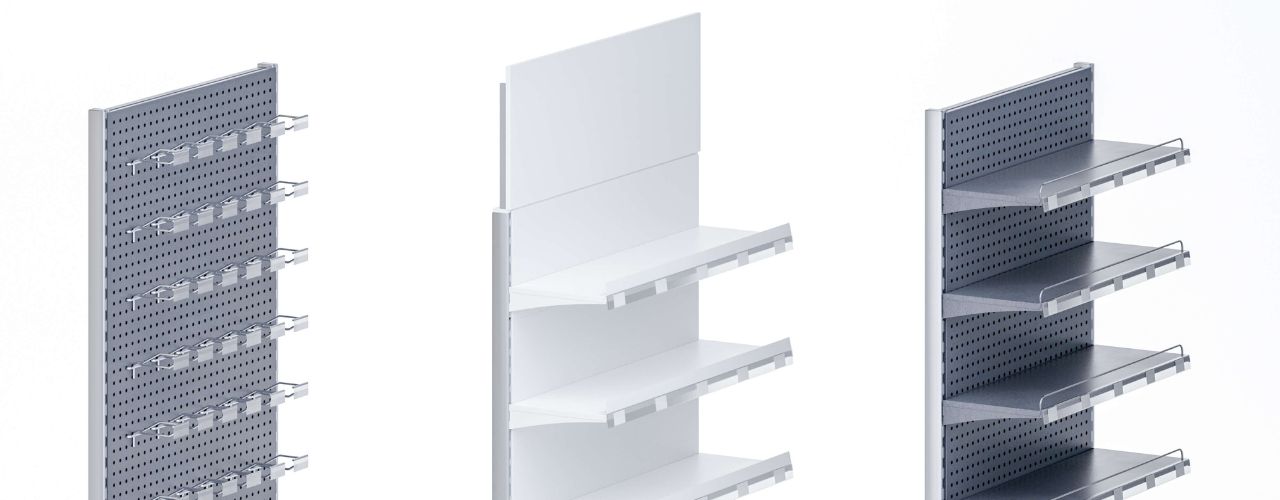
Retail theft continues to rise across the UK and places pressure on margins in supermarkets, convenience stores, DIY outlets and electrical retailers. Small, high-value products displayed on open strips remain easy to remove in multiples when fixtures allow unrestricted access. In many stores, the weakness sits in the hardware. Retail display hooksinfluence how quickly items can be removed, how clearly stock remains visible and how consistently planograms hold their structure. When specified correctly, hook systems can slow bulk removal and improve day-to-day store organisation without disrupting self-serve shopping.
For store managers and loss prevention teams, fixture specification affects replenishment speed, visibility after busy trading periods and the time spent correcting unstable bays. Strengthening hook hardware is often a practical first step before introducing more restrictive security measures.
Why Open Hook Displays Increase Shrink Risk
Theft on hook displays usually involves speed and access. When blister packs hang several units deep on long strips, customers can remove multiple items in a single movement. Remaining stock may slide backwards, giving the impression that levels remain stable even when depletion has occurred.
High-margin, small-pack products such as razor blades, batteries, cosmetics and tech accessories are particularly exposed. Where retail display hooks allow unrestricted front access and excessive loading, sweep removal becomes easier and gaps harder to identify during routine store walks.
Shrink often develops gradually through repeated multi-unit removals. Reviewing hook length, strength and capacity in high-risk bays frequently reveals that the specification does not align with product weight or trading conditions.
How Secure Hook Systems Reduce Bulk Removal and Improve Stability
Secure hook systems address both access control and structural stability. Controlled-dispense or stock-limiting designs restrict how many units can be removed at once. Reinforced bases reduce forward dip in heavier categories and help maintain straight product lines.
Upgrading selected bays with retail display hooks that limit rapid multi-item access introduces friction at the display level. In high-value categories, even a short delay between units can discourage repeated removal in one action.
Well-aligned hooks also keep front units visible and evenly spaced. When strips hold a consistent number of products, unexpected emptying becomes easier to detect during daily checks.
If you are reviewing high-risk bays and would value a practical discussion around specification or phased rollout planning, our team can provide guidance based on your current setup. You can start that conversation through our contact page.
Choosing the Right Hook Configuration for High-Risk Categories
Retailers commonly compare three configurations when assessing retail display hooks for high-risk categories:
Standard hooks
Suitable for low-risk, lightweight products. Offer high capacity but limited control over rapid multi-unit removal.
Reinforced hooks
Designed for heavier accessories or higher-load categories. Maintain alignment and reduce bending over time.
Stock-limiting or controlled-dispense hooks
Reduce strip capacity or restrict forward movement. Introduce friction while keeping products openly accessible.
Selecting the right retail display hooks option depends on product value, weight, concealability and rate of sale. Many retailers strengthen hook hardware before considering enclosed cabinets or electronic tagging.
Compatibility with Pegboard and Slatwall Systems
Security-enhanced hook systems are available for pegboard, slatwall, mesh panel and backbar formats. This allows retailers to improve protection without replacing entire wall installations during refits.
Selecting compatible retail display hooks enables targeted upgrades in high-risk bays while maintaining consistency across existing display systems. Reinforced pegboard variants suit heavier DIY accessories, while slim-profile slatwall options support electrical and technology categories.
Phased implementation across multi-store estates helps reduce disruption and align improvements with trading cycles.
How to Audit High-Risk Hook Displays
A structured review of existing retail display hooks strengthens control over exposed categories:
- Identify bays containing small, high-margin and easily concealable products.
- Check hooks for bending, uneven angles or overloading.
- Look for mixed SKUs or products sliding to the rear of the strip.
- Observe how easily multiple units can be removed in one movement.
- Review how quickly emptying strips are noticed during routine checks.
Where weaknesses appear, replace standard hardware with reinforced or stock-limiting alternatives. Align hook length and load capacity with actual replenishment practice.
Strengthening Store Control Through Smarter Hardware
In high-footfall retail environments, small fixture decisions influence operational control. When specified correctly, retail display hooks can slow bulk removal and make irregular depletion easier to identify.
Treating retail display hooks specification as part of a wider shrink strategy supports clearer presentation and more consistent replenishment. Reviewing high-risk bays ahead of peak trading periods or refits allows teams to correct specification issues before they translate into repeat loss.
If you are planning a refit, addressing shrink concerns or standardising fixtures across multiple sites, we can review your current display configuration and recommend suitable hook systems for your environment. To explore the next steps, please visit our contact page and outline your requirements.
Frequently Asked Questions
How do anti-sweep hook systems work in high-theft categories?
Anti-sweep systems restrict how quickly consecutive units can be removed from a strip. By limiting forward movement or releasing one item at a time, they slow rapid multi-unit removal in high-risk categories.
What hook length should retailers choose for small packaged products?
Hook length should match product depth and intended facing capacity. Over-length strips can hide depletion at the rear and increase the likelihood of overloading.
Are reinforced hooks necessary for heavier DIY items?
Heavier accessories place forward stress on strips. Reinforced variants reduce bending and help maintain alignment over time.
Can stock-limiting designs improve shrink control without locking products away?
Stock-limiting designs cap the number of units per strip and reduce the chance of full-strip removal while preserving open access.
How often should retailers review hook hardware?
High-risk bays and their retail display hooks should be reviewed alongside shrink analysis, seasonal resets and planned refits to ensure specification remains aligned with trading conditions.